
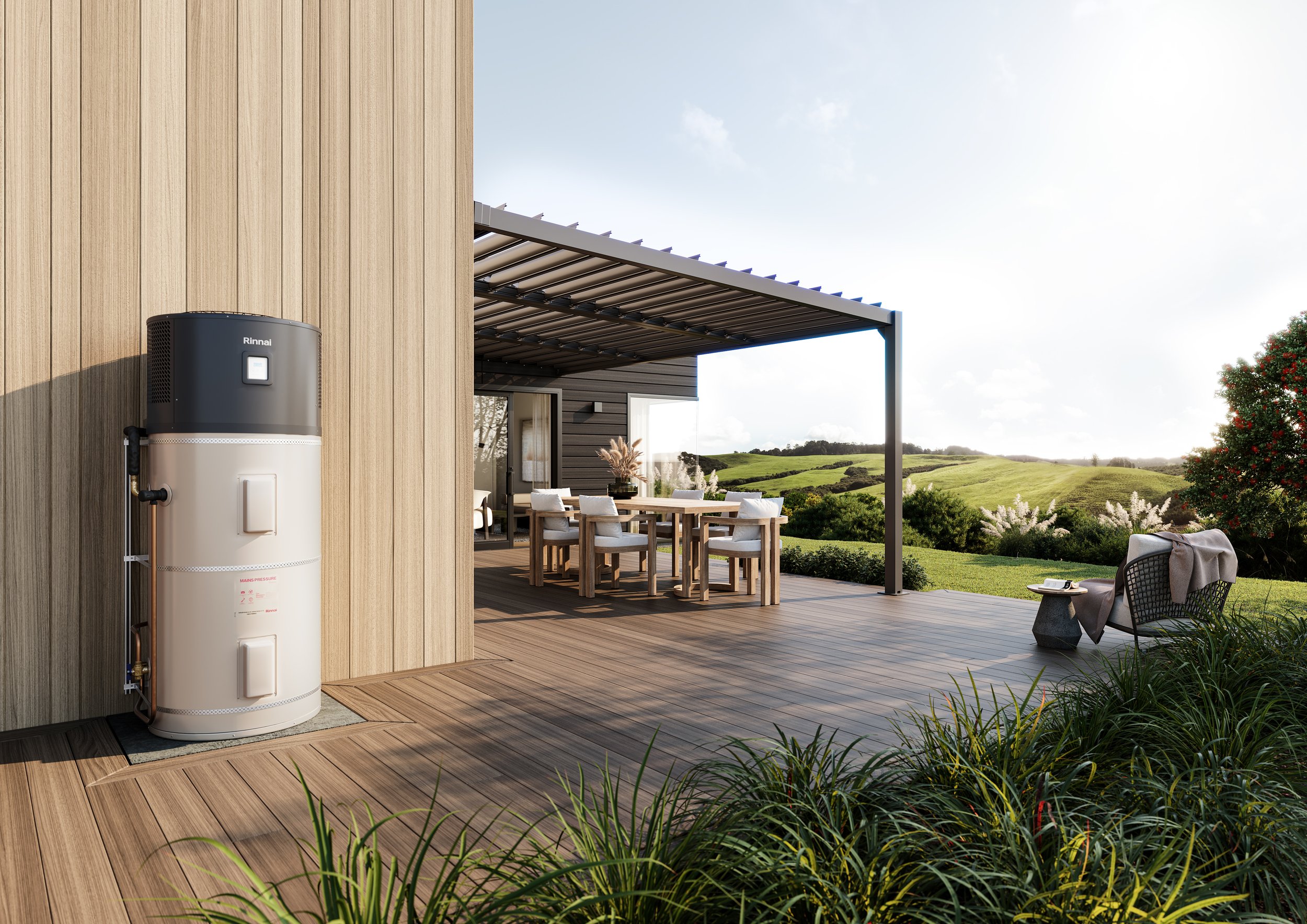
Hot Water Heat Pumps
Hot water heat pumps are an energy-efficient and low-emissions technology that significantly reduces household water heating costs.
At a Glance
Unlike standard electric cylinders that generate heat directly, heat pump hot water systems extract heat from the surrounding air and transfer it into the water — much like a fridge, but in reverse.
As a result, they typically use around 60–75% less electricity than traditional electric hot water cylinders. Ideal for:
Replacing an existing electric or gas hot water system (including gas califonts)
Households with higher hot water use (families, busy homes)
Homeowners wanting lower running costs and reduced emissions
What to know:
Suitable for Wellington conditions (down to approx. −10 °C)
Can be retrofitted or installed as a new system
Available as integrated or split systems
Higher upfront cost than standard cylinders, but significantly lower running costs
Free site visit & advice available – we’ll help you decide if a heat pump hot water system is right for your home.
Integrated vs Split Hot Water Heat Pump Systems
There are two main ways a heat pump hot water system can be configured. The right option depends on your available space, household size, and how your existing hot water system is set up.
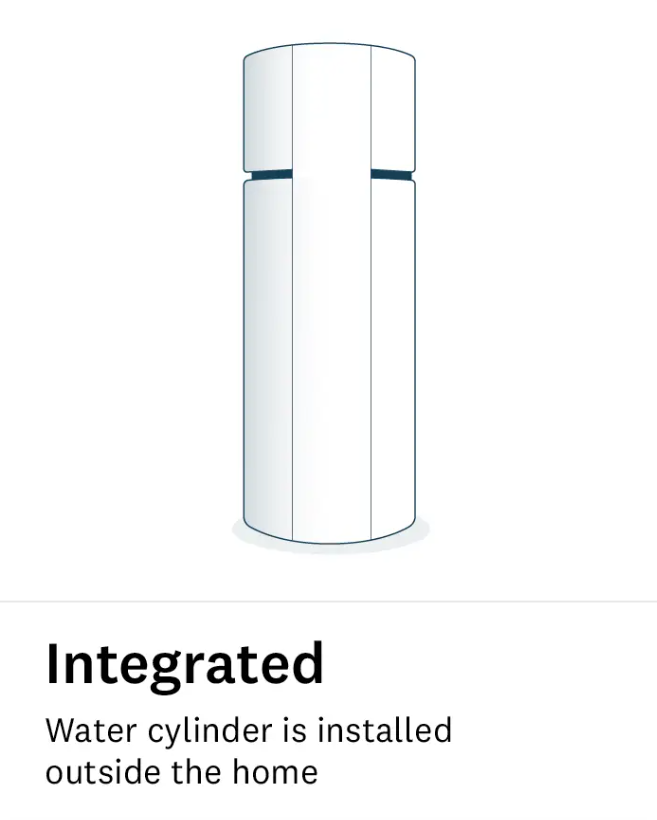
Integrated systems - Best suited when:
Replacing an existing external electric or gas hot water system
A simple, all‑in‑one outdoor replacement is preferred
Internal space is limited
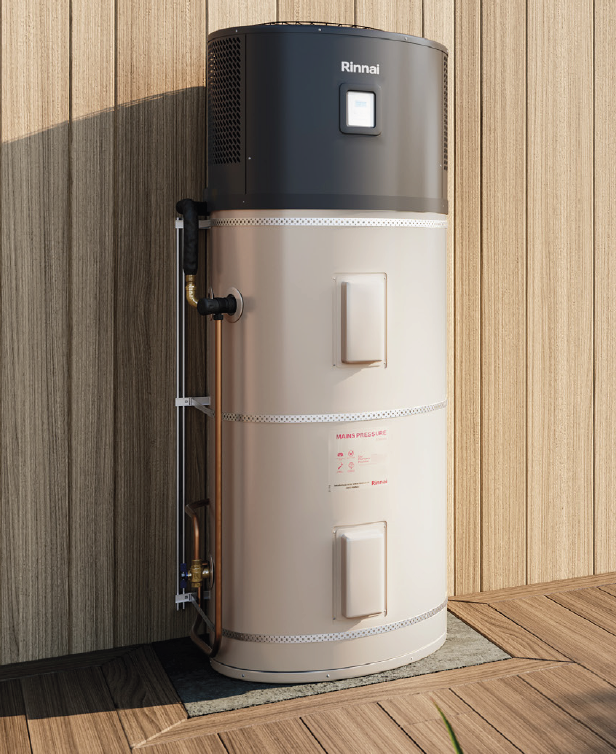
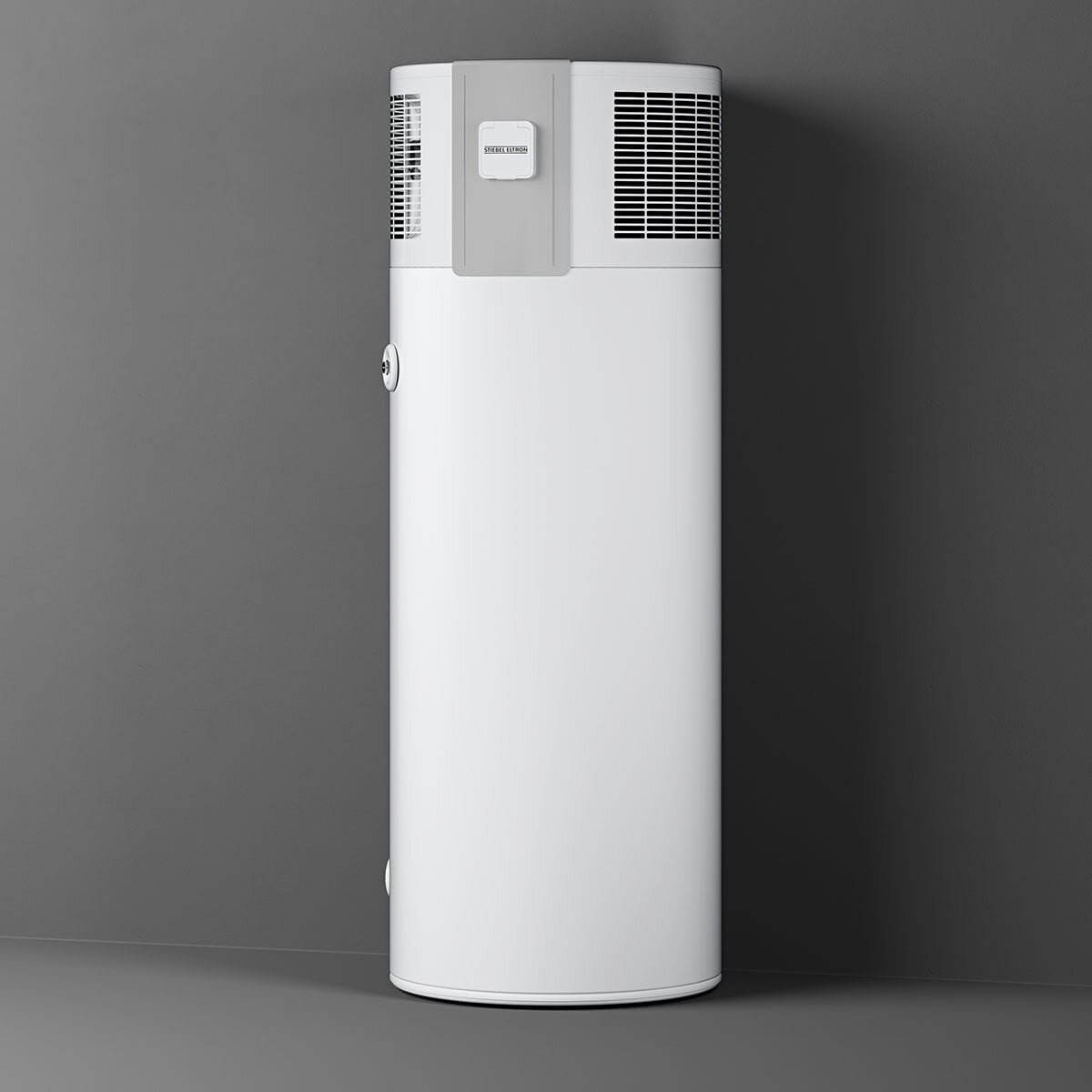
Integrated systems combine the heat pump and hot water cylinder into a single outdoor unit, making them a clean and straightforward replacement option for many homes.
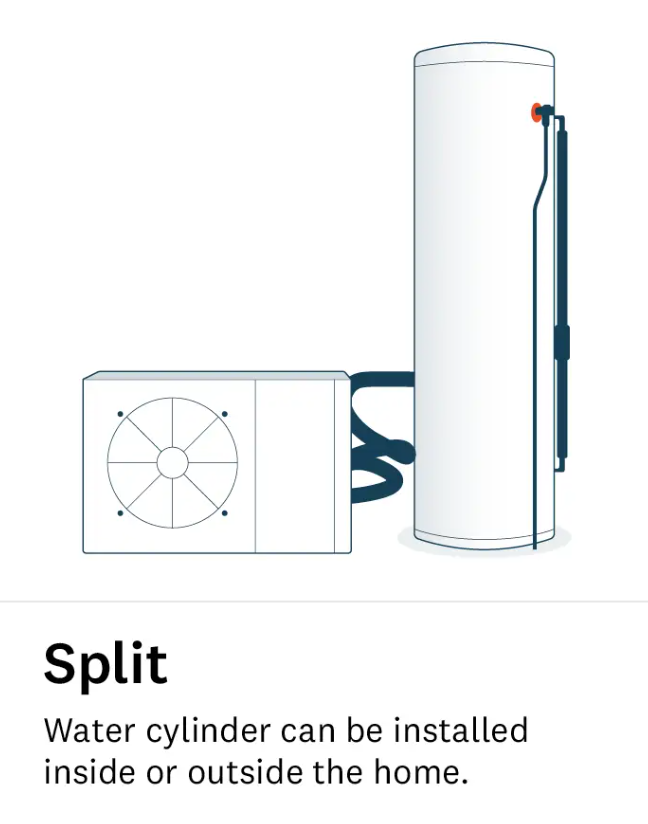
Split systems - Best suited when:
Higher hot water demand is required
The hot water cylinder needs to be located inside the home
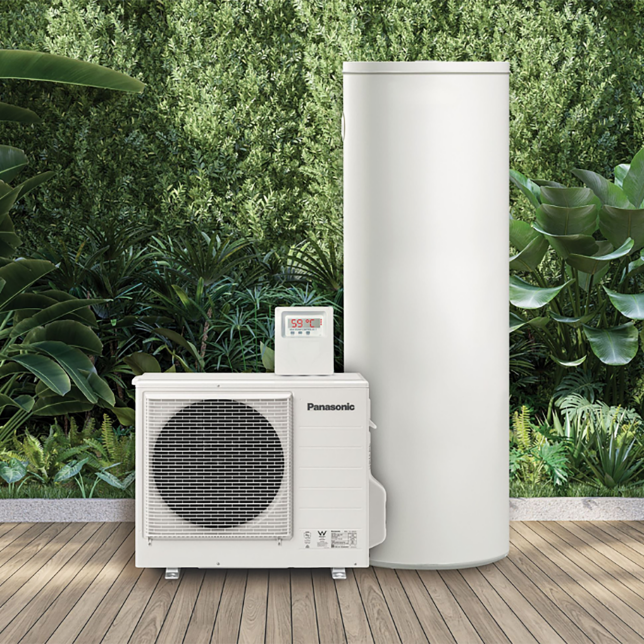
Split systems separate the outdoor heat pump from the hot water cylinder, providing greater flexibility in system layout and performance.
We’ll help you choose the right configuration based on your home layout, hot water usage, and long‑term plans — not just what’s easiest to sell.
Trusted Brands We Install





Frequently Asked Questions
-
Heat pump hot water cylinders use up to 75% less electricity than conventional electric hot water systems, and are cost-effective for households with higher water consumption.
Although they incur a higher up-front purchase cost, their low running costs make them a worthwhile trade-off.
Information based on EECA.
-
Hot water heat pumps use a vapour compression cycle with a refrigerant fluid which works to extract heat from the air and transfer it to the water until the desired temperature is reached in the water tank.
The refrigerant absorbs heat from the air and evaporates into a contained space. It is then compressed, which raises its temperature to above the desired hot water temperature.
The hot, pressurised refrigerant is then sent through a condenser coil, where it transforms back into a liquid, transferring its heat to the water.
The liquid refrigerant then flows back to the evaporator coil to repeat the cycle.
Information based on EECA.
-
There are two types of residential hot water heat pumps — your choice may depend on how much space you have in and around your home.
Split system: this solution consists of two separate components: an outdoor unit which contains the refrigerant circuit, and a separate hot water cylinder which can be located either outdoors or indoors. The outdoor unit and cylinder are connected with water or refrigerant pipework, which carries the heat to the cylinder.
Split hot water heat pumps provide greater flexibility in installation, as the cylinder can be placed closer to the hot water consumption areas. It is also possible to retrofit the outdoor unit (the heat pump itself) to an existing hot water cylinder.
Integrated system: this option combines the components of a heat pump and a hot water cylinder into a single unit. The heat pump part of the unit is most commonly on top of the cylinder, and the single unit must be installed outside. Depending on the layout of your house and existing plumbing, this could offer easier installation.
Information based on EECA.